Nashville-based singer- songwriter Jack White complains that audience members at gigs are apathetic and fixated on their phones instead of matching the energy that he and his band give out to them. He’s absolutely right, writes Philip Cummins.

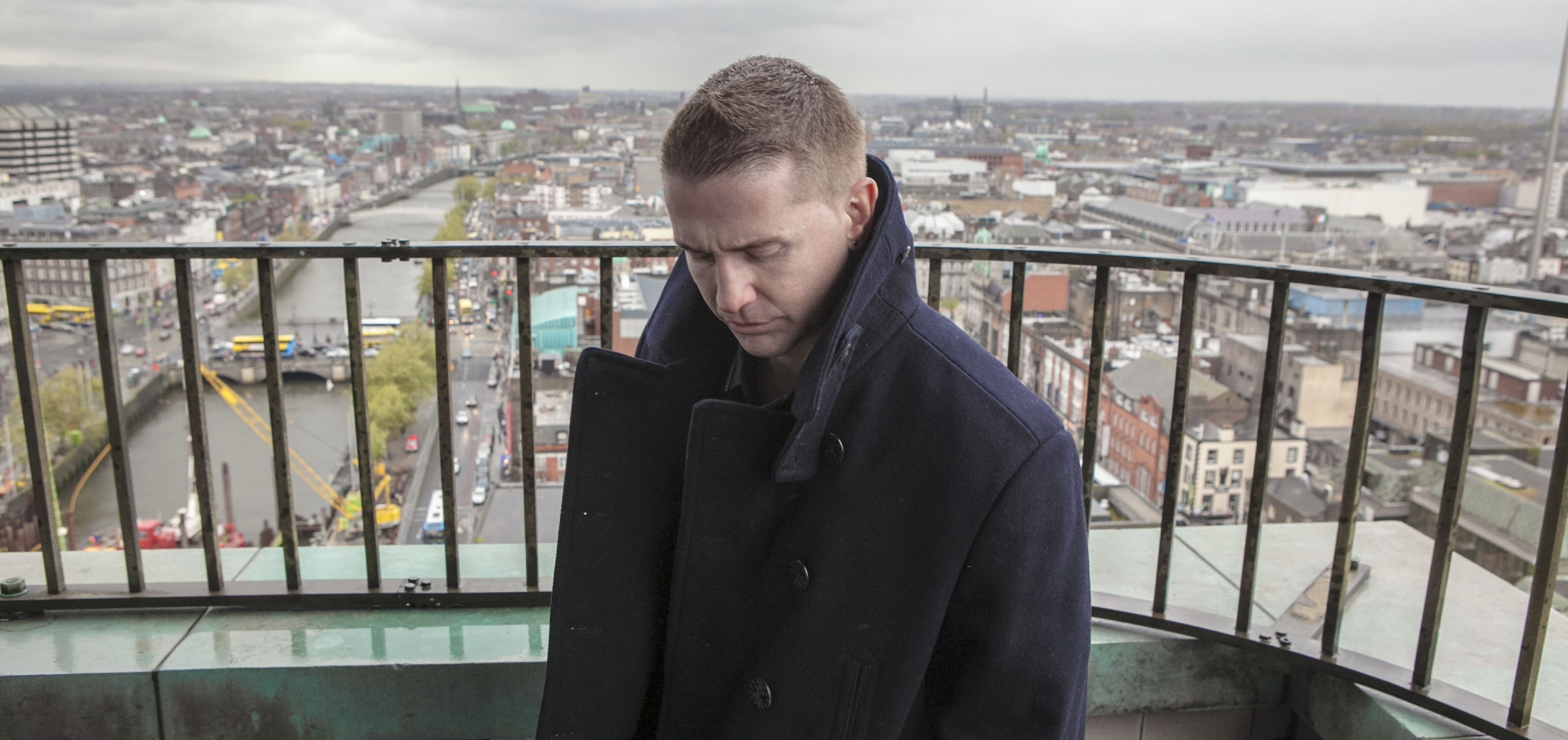
I smell a rat: Jack White has voiced his displeasure at Generation Y audiences obsessed with their phones.

I smell a rat: Jack White has voiced his displeasure at Generation Y audiences obsessed with their phones.


THE REVOLUTION
 will, as with everything else, be tweeted.

Rolling Thunder: Jack White vents his spleen in a Rolling Stone cover interview ahead of the release of Lazaretto.

Rolling Thunder: Jack White vents his spleen in a Rolling Stone cover interview ahead of the release of Lazaretto.

On the eve of the release of Lazaretto, Jack White’s second solo album proper-  and what must now be his 15th record, all side projects and White Stripes material considered- Detroit native White has complained, in a cover interview with Rolling Stone, that audience members “can’t clap any more” because they have a drink in one hand and a mobile phone in the other. Gone are the days, White implies, that people would launch themselves around the venue, throwing all manner of shapes and letting themselves free- free of their socio- economic constraints, their work commitments, their suburban ties, their anxieties- in an effort to match the energy and vibrancy powered by the group of musicians on the stage.

No. Generation Y’s insistence on being in the loop is to the detriment of life in the moment. Tweeting / texting in cinemas and at gigs and taking instagam snaps of dinner and drinks in restaurants has become par for the course. In the culture, there is now a compulsion to tweet everything one is doing and instagram everything that one is eating for their breakfast, lunch and dinner.


YouTube glory hunters

Most of all, however, Generation Y feel compelled to be ahead of the pack, especially so at gigs. I have not been to a gig in the last five years where there hasn’t been at least twelve people, usually dispersed amid the rows in front of me, insisting on taking out their iPhones and iPads, capturing video and audio footage of the gig to upload that footage on streaming sites, such as YouTube and Vimeo, before anyone else, in a desperate effort to claim YouTube glory, scooping kudos from fellow fans.

Technology and social media are both mediums that connect users to the world in ways that, twenty years ago, were unimaginable: unquestionably so. However, in a social setting- a gig, a meal at a restaurant, wherever one might be- social media and technology alienate us from those around us, perhaps most pertinently at gigs. Collectively, gig goers fixated on their mobile phones drain the room of any energy; the mood and atmosphere, thereby, dull, unremarkable and uninspiring.

I think that I can safely deduce from White’s comments that this is what happens when people spend half their time at a gig on a phone: whatever energy they would have previously thrown back at the stage is now going into live updates on Twitter and on Facebook, as well as selfies and instagram filters of crowd pics that are also uploaded on social networking sites.


#Judas: Classic gigs re-imagined

Iconic gig: Sex Pistols live at Manchester's Lesser Free Trade Hall on 4th June 1976

Iconic gig: Sex Pistols live at Manchester’s Lesser Free Trade Hall on 4th June 1976. The gig would later inspire some of Manchester’s most important figures such as members of Morrissey, Tony Wilson and members of Joy Division.

The apathy of audiences at live shows, which as a regular gig- goer and a reviewer for print and on-line media I have witnessed consistently, is best gauged by remarkable gigs of years gone by where technology was neither a distraction nor a compulsion for audience members.

Consider the following: would the Sex Pistol’s iconic gig at Lesser Free Trade Hall on 4th June 1976– hypothetically, of course- have carried the same cultural, social, generational impact that it clearly did if future members of Joy Division, future Smiths front man Morrissey, members of Buzzcocks and Factory records impresario Tony Wilson et al had taken selfies while the Sex Pistols were playing  in the background? Possibly not.

Would John Cordwell have bothered heckling Bob Dylan at Manchester’s Free Trade Hall on 17th May 1966 with cries of “Judas!” at Dylan’s remarkable gig, of which authors wrote feature-length books, or would Cordwell, perhaps, have been too busy broadcasting his disgust live on Twitter with the hashtag #Judas ?


The role of promoters / venues and personal responsibility

Concert venues could learn an awful lot from theatre companies and theatres, both of which have persistently combated against talking, texting, tweeting and all other behaviour that is a general annoyance not just to those audience members around them, but, crucially, to performers. How peeved would any of us be if the glare from the screen of a mobile device or the ringtone of a device were to throw a performance off-key; a performance that has been months in the making and hundreds of hours in rehearsal?

Unfortunately, concert promoters and venues care little about gig going etiquette: once promoters, venues and artists’ management have their fees from ticket sales they care little about what actually happens at the gig, save for illegal or actionable behaviour.

Everyone, however, bears some responsibility, I feel: venues, promoters and, most of all, participants. I use the word “participants” very deliberately: everyone who attends a gig contributes as much to the energy and the feel of the room as the musicians and the sound personnel. Just ask any of those who were at Lesser Free Trade Hall on 4th June 1976.

Her first offering of completely original material in 13 years, Natalie Merchant’s eponymous album is a triumph, writes Philip Cummins

Originally published by Entertainment Ireland. To read the original, please click here

Natalie Merchant album art

Natalie Merchant’s eponymously titled new album is a triumph.

Following 2010’s Leave Your Sleep, a concept project thematically focused on childhood, featuring British and American poems set to music, former 10,000 Maniacs singer Natalie Merchant returns with an eponymously titled and self- produced record, her first studio album of fresh compositions since 2001’s Motherland.

Opening track and flagship single ‘Ladybird’ is a beautifully mixed pop song brimming with soul. The verses feature almost minimal instrumentation, the bridge and choruses lifting off the ground with melodic multi- tracked backing vocals, lush strings and understated guitar scales, all of which could, in the wrong hands, could become overblown and overcooked.

The songs that follow are nowhere near the ecstatic pop heights of ‘Ladybird’; rather, ‘Ladybird’ is used as a shade to contrast the austere, mature and oak-y sounds of the following ten songs. A song full of aphorisms, ‘What Maggie Said’ is certainly one for Gillian Welch fans, its combination of Dylanesque wisdom and a memorable chorus shot through a finger- picked acoustic guitar full of references to other songs. There is also a sense that the 50-year-old singer- songwriter is aware of her influences; ‘Texas’, a restless, shifting minor- key tune, feels less like a song about the lone star state and more of an homage to Texas songwriters, such as Townes Van Zandt and Lyle Lovett.

It’s when Merchant moves out of her comfort zone that the record begins to take shape. Singing about New Orleans, which post- Katrina has almost become a song form in itself for many American songwriters, Merchant’s ‘Go Down, Moses’ is, perhaps, the most New Orleans- sounding tribute to The Crescent City, featuring more funk and boogie than at which you can shake a Dr. John record. Lyrically, it encapsulates the central themes of the record: those of resolving one’s self with the past for the benefit of what may lay ahead, or as Merchant writes “Well, I’m far too quick with the poison pen, / can’t believe I’m writing again after all these goddamned years.”

There are missteps: the jaded metaphor of ‘Black Sheep’ titles a song that is too derived from the slow, gritty jazz of Tom Waits at his barfly best. A closing trio of a silent movie- era ditty (‘Lulu (Introduction’)), a bookend to the lush pop of ‘Ladybird’ (‘Lulu’) and a beautiful, elegiac closer (‘The End’), however, are enough to merit Merchant’s beautiful, mature and memorable record a triumph.

FOUR STARS

Ahead of her May 29th appearance at K-Fest in Killorglin, County Kerry, prodigious 18- year old singer- songwriter Bridie Monds- Watson shares her appreciation for Pink Floyd’s work on record and film, what it meant to her to grow up in Derry and what piece of priceless music memorabilia she wants more than anything.

Soaking it up: Derry singer- songwriter Bridie Monds- Watson

Soaking it up: Derry singer- songwriter Bridie Monds- Watson.

Originally published by Entertainment Ireland. To read the original, please click here. 


What’s been the highlight of your year so far?

There have been a few, but I think definitely touring with Chvrches and selling out my first headline in London are the brightest highlights.

When did you first realise you wanted a career in music?

I didn’t. When I first released my music on the internet the reactions were great and the whole thing kept going from there. It wasn’t planned; it just worked.

In three words, describe the five minutes before you walk on stage.

Fear. Excitement. Hunger.


How do you wind down after a gig?

I don’t like to wind down; I enjoy the adrenaline and run around like a ADHD rabbit. Then I talk to a lot of people.

In three words, describe the live scene in Ireland.

Big. Interesting. Fun.

Whose career do you envy and why?

That guy who went and did flappy birds.

Vinyl or digital downloads?

Downloads are quick and handy, but vinyl can be in your hands and I think it can be more atmospheric. Plus, you’re guaranteed artwork. Annnnd they look cool as shit.

What is your favourite record shop in the world?

Hmmmmm…I like Tower Records in Dublin, but there’s one five minutes from my house (gaff) called Cool Discs and it’s cool.

Name one rare record you don’t own, but you want more than anything.

It would be dead sweet to own the first pressing of Dark Side of the Moon.

Name one piece of music memorabilia that you wish you owned.

Les Paul’s first Les Paul.

What is the one thing in your life that you couldn’t go without?

Hearing new music.

Name one record, one book and one film that everyone should hear / read / see.

The Wall movie.

Name one overrated TV series and one underrated TV series.

I think Breaking Bad is overrated but I’ve seen like 30 seconds and it’s too dramatic for me. Adventure Time is underrated.

Pick the director and lead actor for a biopic about your life.

Steven Spielberg. The actor would be me. I can’t act though. I think.

Describe the perfect night in.

Making demos in my room or writing or jamming with mates.

Describe the perfect night out.

Corona, one of my favourite bands, an 80s shirt and my mates.


Where did you grow up and what are the best and worst things about that place.

I grew up in both Lisburn and Derry. When I was very young we lived in the countryside and I really, really loved that. Me and my brothers had a really cool tree house and loads of places to explore. In Derry we played a lot of hide and seek in the street with, like, forty other kids. Snowballs fights became quite drastic and my parents got rid of our trampoline because I tried to jump out of the window onto it.


What is your biggest fear?

It used to be the dark, but now it’s breaking something in my hands.

Who is the person in your life without whom your life wouldn’t be the same?

My best friend jack. I moved next door to him when I was six and now he’s 17 and I’m 18. We’ve never not been friends. Sometimes he looks like a potato. It was his birthday two days ago and were still not sure how to celebrate. Maybe, paint ball.

What is the most important lesson life has taught you, so far?

Honesty is the best policy.

If you could give one piece of life advice it would be…

Don’t be stupid. Do what you want to do and don’t waste time.
SOAK plays Sol y Sombra Tapas Bar, Killorglin, Kerry on Thursday 29th May. Tickets are €12 ex. booking fee. The gig is part of K-Fest, an arts festival of music, art, poetry, drama and film. For more, visit entertainment.ie/k-fest

Catching Up With… is a new series whereby I ask 21 questions to figures from music, theatre, TV and film. First up is Galway based Clare musician Daithí Ó Drónaí.

Clare musician Daithí Ó Drónaí. Image: Daithí Facebook page

Clare musician Daithí Ó Drónaí. Image: Daithí Facebook page

Originally published by Entertainment Ireland. To read the original, please click here.

MERE MONTHS AWAY from the release of In Flight, his eagerly awaited début album, 24-year-old musician Daithí Ó Drónaí is busy putting the promotional wheels in motion for a record that he has laboured over for three years. However, a busy schedule hasn’t stopped the Clare man from practising in this year’s Trócaire Live gig at The Grand Social and supporting a charity close to his heart.

“The line- up, this year, is great. Trócaire ran the line up by us before we committed and we were just really impressed with the diversity of the performers. I’m just jubilant to be doing it and with the type of music that’s featured for the gig, Trócaire Live seems to be going for a real good fun night: a light- hearted night. It needs to be a celebration of Trócaire.

“We’ve a little bit of work with them before and it’s been great, but Trocaire has been with me my whole life. I grew up in Clare and the Trocaire box was always a real household thing: it’s the first thing that I think of whenever someone mentions Trocaire to me, so it’s been a charity that I and my family have been contributing for some time, as have so many other Irish people. Growing up in Ballyvaughan, there’re a grassroots feeling about Trocaire: it was always featured in our homes, our schools, our church…it seemed to be one of the main charities that I was involved in when I was a child.”

What’s been the highlight of your year so far?

Finishing my first album, which I’ve been working on for about three years.

When did you first realise you wanted a career in music?

When I started playing in bands in boarding school. Any time I wasn’t studying, I was playing bass in bands. It seemed something that was so enjoyable and required little effort.

In three words, describe the five minutes before you walk on stage.

Nervously freaking out!

How do you wind down after a gig?

I have a really strong group of friends that have been with me for a while who hang around after shows. We play late, so we’re never home early!

In three words, describe the live scene in Ireland.

Incredibly forward thinking.

Whose career do you envy and why?

Totally Enormous Extinct Dinosaurs (Orlando Higginbottom). He’s got a great ethos. He doesn’t define himself by genre: he just wants to make people dance., which he’s been doing for years. That’s the way I want to go: to create dance music for dance music’s sake and not get hung up on sub-genres or where it should be at any given time.

Vinyl or digital downloads?

Digital downloads for the moment, but I’ve just recently started to collect vinyl. All my favourite stuff is on vinyl, it’s fast, I can get to it immediately.

What is your favourite record shop in the world?

Bell, Book and Candle, Galway. It’s local and the people in there are so unbelievably enthusiastic about music.

Name one rare record you don’t own, but you want more than anything.

Prosumer’s remix of Murat Tepli’s ‘Forever’. I think they only printed a couple of hundred copies on vinyl. I’d love to own that one.

Name one piece of music memorabilia that you wish you owned.

Anything from that first studio that Daft Punk had in Paris. It was such a special time in dance music or anything from Studio 54.

What is the one thing in your life that you couldn’t go without on a daily basis?

I live out of my laptop. I freak out if I’m not near the laptop at any given time: I carry it every where with me. I create all my music out of the one laptop and everything that I have on the laptop is backed up by about four or five hard drives, so if I didn’t have my laptop I’d have nervous chills and I’d freak out! 

Name one record, one book and one film that everyone should hear / read / see.

Record: Swim by Caribou. Book: On the Road by Jack Kerouac. Film: Searching for Sugar Man

Name one overrated TV series and one underrated TV series.

Overrated: True Blood. I never got that show at all! Underrated: Oz. It’s up there with The Wire.

Pick the director and lead actor for a biopic about your life.

Wow…we’ll get Matt Damon to star as Woody Allen and me to direct. Who wouldn’t want to see Woody Allen making a music film? He’d romanticise it all.

Describe the perfect night in.

Playing video games until very early in the morning and nothing else.

Describe the perfect night out.

There’s a scene of people in Galway having nights out where nights out wouldn’t be the norm, which is great. Places outside the city limit like Innisheer. Galway’s always had great nights out in some form or another.

Where did you grow up and what are the best and worst things about that place

I grew up in Ballyvaughan, Clare. Best things? The scenery, which I never appreciated when I was younger: beautiful. The worst thing? If you want to go to anyone’s house, you have to drive like 15 minutes! So you’re social life built on the internet.

What is your biggest fear?

Getting to a point where I wouldn’t be able to create anything.

Who is the person in your life without whom your life wouldn’t be the same?

My mom. When I was growing up, she shaped me as a person.

What is the most important lesson life has taught you, so far?

My whole family have an ethos of never giving up. It’s developed as continually upgrading. When it comes to living shows or recording, I never allow myself to enjoy the level I’m on; I’m always trying to improve to the next level.

If you could give one piece of life advice, it would be…

Do what you love. I see way too many people my age getting stuck in jobs that they do for money. Never get complacent do what it is you want to do. Otherwise, you’ll regret it.

Trocaire Live takes place this Saturday 10th May in the Grand Social. Tickets are €10 via entertainment.ie/tickets

Ahead of her first Irish tour, during which she performs as part of a duo, Mama Kin- that’s Danielle Caruana to her Mum & Dad- spoke to us about the importance of the great outdoors to her writing process, incorporating her colourful family history into her songs and her curiosity about Irish folk music and storytelling.

Originally published by Entertainment Ireland. To read the original, please click here.

The Magician's Daughter: Mama Kin, aka Danielle Caruana.

The Magician’s Daughter: Mama Kin, aka Danielle Caruana.

GROWING UP as she did in a family full of natural performers- musicians and magicians, no less- Mama Kin (Danielle Caruana) couldn’t help but join the family business. On ‘The Magician’s Daughter’, her fourth record, the Australian singer- songwriter has made a lush, warm- sounding, summer career full of layers of musical arrangements.

PC: The Magician’s Daughter is such pleasant- sounding album, reminiscent of the good old days of analogue tape recording. How did you achieve that sound on the record?

MK: I have Jan Skubiszewski to thank for the sound of the record. He’s visual person. He goes for deep sound that has great width and depth to it, and that has so many dimensions. That’s what struck me with the sounds that he was getting early on in the process. For this record, more so than the last record, I brought in songs to the band that were raw as I didn’t want anyone to interpret them as we might live. I wanted them to understand them as stories for which we were painting a picture. Jan had a visual aesthetic to how he recorded; this sense of depth and width to what we wanted to achieve.

What kind of records were you listening to during the writing and recording of the album?

I was listening to Joan As A Policewoman, and I was also listening to Laura Marling; I was trying to get that atmospheric sound that she creates. I was also listening to this great compilation record called Saturday Night Fish Fry, a compilation out of New Orleans, which I was listening to mostly for drum grooves and sounds. It’s a really old- school, New Orleans record. All the drum takes to sound like loops, but there’re too many fills and too much flair for them to loop. Between those two very broad extremes was the record that I wanted to make.

You mention New Orleans: Nick Cave has often spoken of the thin line between the rugged, physical landscape of Australia and that of America. How much of that comes through on the record? There are undertones of Americana throughout ‘The Magician’s Daughter’…

I think that feel is probably coming to my brother, Michael, who plays keys on the record and is a huge musical influence on me. He’s 17 years my elder, so I’ve had his musical sensibilities embedded on me all of my life. He’s heavily influenced by artists like Stevie Wonder, Dr. John, Ray Charles: that’s his world of music. So I think that when we mix that sensibility with my love for artists like Gillian Welch, Aretha Franklin, Bonnie Raitt. We have the same musical language even though we’re approaching the song from different places. So making music with him is inspiring.

As for the physical landscape…I’m always tapping into that sense of open space, that harsh dynamic in our country. It’s interesting, though: Michael lives on the east coast, where we’re from, and I’ve lived on the west coast of Australia for about eight years. I am very much shaped by my environment.


How important is the outdoors to you during the writing process? From listening to the record, I get the feeling you’re not sitting indoors, staring at screens…

It’s hugely important: I’m the kind of person that if I wasn’t getting my daily injections of nature that I wouldn’t be able to create anything. So there’s a sense of almost dead calm, that space that nature affords me in my life. ‘Red Wood River’, for example, was written after I’d gone on a camping trip by a river and I had all these visual ideas of being swallowed by a river; what is it to be inhaled by a river? These were all things that triggered how I write.

So the relationship between nature and natural places and us as humans to be creative is so completely intrinsic that I think it could be a problem with the next generation of kids that are coming, though, which is why my parental philosophy is very much embedded in minimal screen time, how are we expressing ourselves, learning to be on your own…we’re such a stimulus addicted generation. I feel myself reaching for my phone even though I don’t need it! Seeing that relationship play out with children is frightening.


You come from a long line of musicians, with four of your siblings working as professional musicians. Has it ever gotten competitive or it very much collaborative?

Quite the opposite! I had a long time of not sharing my music as I didn’t think that I was good enough. My brothers were always encouraging me, asking me where I was in the development of my songs. At the first whisper that I would develop my songs, they were proactive in helping me. In fact, when I was playing my first shows on my first tour, my brother sat in on the rehearsals on some of the songs and in the space of one rehearsal he ended up playing on 90% of the set and since then we’ve been playing together.

Taking my songs to him was scary but enlivening. He breathed new life into the songs that no- one else could have breathed because of how I know him.


And when you’re at home, writing and demoing new songs, do you work mostly on your own or do you work collaboratively with your husband (musician John Butler)?

Sometimes, primarily when we’re co- writing. But writing for me is a very private, solo experience. And I don’t ever want to share until I’m totally sure of what it is that I have, and I think that doing that too early can be a very damaging thing. You need the shape of the song to come out before you can have someone else add there perspective to how they see it. The song has to get to a certain point of maturity before I start showing it to someone else.


Are you always able to judge when the song is complete and when you are ready to share the song with other musicians?

I know when to ask for feedback! As far as knowing when it’s ready? Yeah, I think I have a good sense of when it’s ready. In the song- writing process, I can feel when a section is too long or too short. The recording is harder for me, though. I had an interesting experience with ‘The Magician’s Daughter’ in that when we finished adding all the layers and getting that lushness of sound, we were getting ready to tour the first single. Before we set out to tour, my brother injured himself in a motorbike accident, so he couldn’t come out on the road. So I went on tour as part of a duo, which is how I’ll be playing these shows in Ireland.

I was petrified having spent months crafting all these layers and arrangements and then having to rely on the rhythmic, bare bones of the song, on stage, during the tour. I can’t wait to that again on these Irish shows because it proves whether or not the songs still stands on their merit.


Did you find that stripping down the songs to their bare bones limited your choices as a performer or did you find it empowering?

It encouraged me to dig deeper: I had to dig deeper regarding my singing, regarding my playing, regarding the delivery. It made me work more with the subtleties of the song. When you’re playing in solo or duo form, you have to create a space where people cannot resist but walk into. It’s a very different practice. I love the feeling of being on stage with a band and having that collective energy, but I also like the feeling of being on stage on my own and having to hold that energetic space and play with it between me and the audience. I’m honoured that I think that my songs work in both settings.


Is the dynamics of solo shows demanding? Solo / Duet performers such as Richard Thompson, Wilco’s Jeff Tweedy and Gillian Welch have mastered it…

Gillian Welch is incredible. Both she and David Rawlings are so completely present to the song. When Gillian sings a song she is so in that song that you can’t help but be there with her: there’s nowhere else that you could be. She fills the room with the presence of the song, which is why I find performing so addictive. You have an hour and a half to share your ten or twelve stories with strangers in a room and somehow, within that dynamic, you have to find a place where, all of a sudden, this thing is intimate- where songs of mine such as ‘Red Wood River’ or ‘Cherokee Boy’ connect and people see themselves in the songs. But that can only happen when you fill the room with your song; you fill that space.

That’s part of the reason why the record is called ‘The Magician’s Daughter’: it’s alchemy to in this art form and to be able to do what it is I do. I love it, but I take it very seriously and you have to be able to sit in the centre.


Familial relationships play a big part in your music: your brother plays in your band, the album is titled in tribute to your mother and you’ve written about your grandfather who was a professional magician in post- WW2 Malta. Some artists have caused rifts in their own families for delving their family history for creative purposes and sharing that history with an audience: has that ever been a problem for you?

It was never a question. As a family we were always very musical, so everything we did was articulated and punctuated through music: there was no separation between my family and my musical life: to separate the two would be like losing a child. I can’t fathom it. Interestingly, I’m the only one in my family who writes the way I write: I’m the only storyteller in my family.

On my first record, I wrote a song called bitter tears, which is about my father’s relationship with his father. It was in me to write that song: my dad’s relationship with his father affected his relationship with me, so of course, I felt that I had to write that song. But, I took it to him to show it to him and get his feedback. He said, “Stop, stop, stop: tell me the words.” When I read him the lyric, he was shocked and asked me if I intended to play the song in front of an audience. I told him that I did, and he let it go. I played it, live, on some shows, but the next time he saw me play he specifically asked me not to perform the song. I was so shocked as I thought that I had been writing the song for him as a gift. But I understood that there was discretion there for him that there wasn’t there for me. For me, my music is my vulnerability, and that’s why it’s powerful; for him vulnerability isn’t powerful: it’s the kind of thing that he avoids. It was an exciting process.


How aware are you of the storytelling telling traditions and the folk traditions of Irish music and Irish culture?

Not as much as I’d like. I did once travel across Australia with a girl from Dingle, so I get the sense of humour, the incredible importance of music, the importance of oral storytelling tradition. My third time here, the time that people are willing to invest in engaging in a yarn. We meet in a lot of ways, the Australians and the Irish.

There’s a strong musical connection, too: Steve Cooney has lived in Ireland for some time, now, and he’s brought something unique to the Irish music scene. Shane Howard, an Australian artist, has solid ties with Ireland and he’s always travelling back and forth, and his work with Mary Black brings him over and back. There’s also the Port Fairy Folk Festival, which this year featured Glen Hansard and Lisa O’Neill, who I think is just great. So when I see these performers, I see what it is that I like to bring to my shows: this dedication to the song, to the story and commitment to delivering it fiercely. I get the same thing with Kila, so I have a great deal of respect and admiration for the culture.


So what can expect from the shows on your Irish tour?

There’s always been three or four territories outside of Australia that I’ve always wanted to play. I’ve chosen them precisely as I feel that they are the territories that will understand stories and get what the back story is about to a song. The Irish, I feel, have a real grittiness to their culture, to their way. And yet it’s surrounded by great wit and comedy, and I think that’s exactly what I try to do. I attempt to get into the dirge of the human condition and add some humour.

What you can expect, I hope, is someone telling stories, being honest. I don’t take anyone coming to a show, lightly. There’s so much anyone could be doing on any night in Dublin so for someone to choose to buy a ticket for one of my shows, I’m on the stage to repay that debt. I don’t take audience attendance lightly. I expect them to leave feeling affected.

Recently reissued by AED records for Record Store Day 2014, Roddy Frame’s 2002 album Surf is a slow- burning masterpiece that everyone should hear, argues Philip Cummins

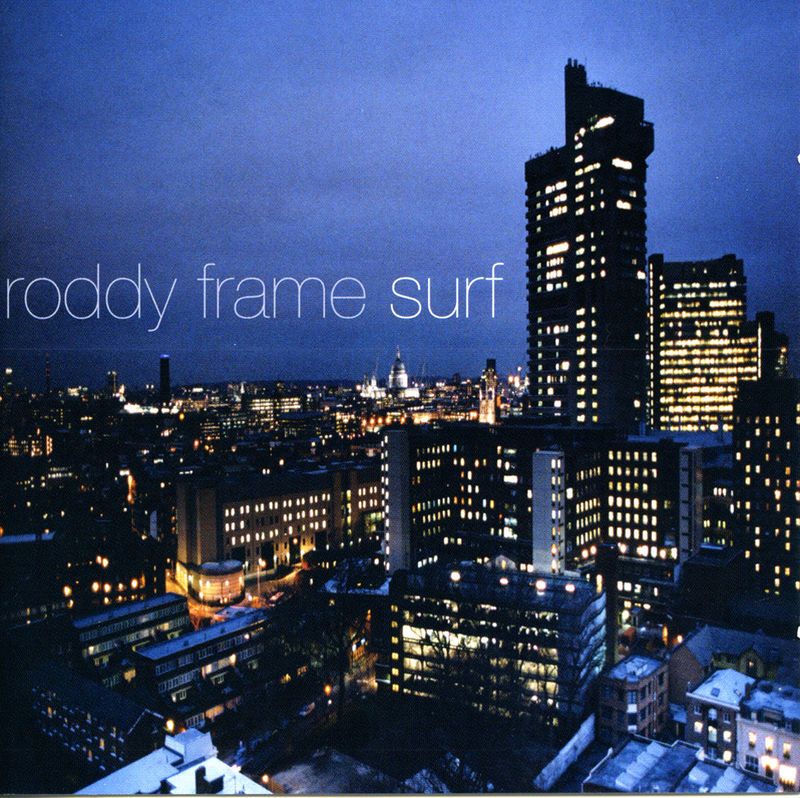
“Majestic”: Surf by Roddy Frame.

…I’ve written an album about day-to-day life in London; about being 38 and wondering what you’re going to do next.

RODDY FRAME claimed the above in a 2002 interview with the Guardian’s Will Hodgkinson before the release of Surf, his second solo LP proper. Hodgkinson interviewed the then 38 year- old Frame, best known as the wunderkind behind Aztec Camera, in his Notting Hill flat where he wrote and recorded all the songs on Surf, his masterpiece.

Taken from atop Burwash House on Weston Street, London SE1, the cover photograph by Hannah Grace Deller (Frame’s then girlfriend), depicts the London skyline in all its twilight beauty. To my eyes, the picture captures London on a dreary Tuesday night in November.

In this photograph, as in Frame’s songs, life is going on in other places: the focus is very much on the switched- on lights in rooms across the city. In the context of the bare instrumentation on the songs collected on Surf- solely voice and acoustic guitar- Deller’s photograph, if anything, feels like a point of view shot from Frame’s mansion- block apartment.

Starting point

Surf opens with ‘Over You’, a finger- picked tune that conveys a rejected lover’s restlessness in the wake of a breakup. As mentioned about the above quote from Frame, the album itself constantly gives a sense that life is continuing in other places across London in spite of the songwriter’s craft of focusing- in on frozen moments in time. No better an example than the line ‘heard you were out, SW3 / talking about how you were over me. Similarly, the song’s final couplet (Me stuck on the strand, trying to get through / And make myself understand that I’ve got to get over you) provides the perfect starting place for the albums’ succeeding ten tracks.

Surf‘s title track slows down the pace ever so slightly. Arpeggio’d chord and long vowels in the lyrics give a the sense of yearning that Frame’s words conveys.

Again, however, the focus is very much on London albeit viewing the city, now, through welled- up eyes (The east end squares’ve grown cold and loud / since I lived there with the twilight crowd / The west end lights have lost their wow).

Frame captures that sense of alienation in the city, of being a small fish in a huge pond and craving intimacy, beautifully in the chorus of ‘Surf’ (When I was young the radio played songs for me/it saved me).

‘Small World’, best known as the theme tune from hit BBC comedy series Early Doors, ends an opening trio of songs that nail the tone of the record, lifting the mood just slightly. Frame’s peppers Hopper- esque images of night-hawks in London town throughout the lyric and his voice is simply stunning on this song; his effortless falsetto blending beautifully with the verses, sung in lower octaves. Like ‘Tough’, ‘Small World’ was, perhaps, mooted as a possible single.

The centrepiece

‘I Can’t Stop Now’ is one of the most important songs on Surf and a song that is at the thematic core of the record. Serving as the breaking point of the tension built up in the record’s opening side, ‘I Can’t Stop Now’ is a good example of Frame’s ability to judge the timing of subtle changes in the dynamics of a song. One of the most cathartic and climactic lines in the song (’til the first tear falls) stands alone from the busy opening verses, giving that line more emphasis and more weight. Similarly, the key change in the final chorus is beautifully timed and renews the tone of the chorus; where the listener heard desolation and sorrow in the previous choruses, the listener now hears a tone of acceptance and defiance in the same chorus, two steps higher. It’s a stroke that only a singer and a songwriter of Frame’s talent and experience could pull off.

Influences

Throughout Surf, Frame wears his influences lightly, though obvious exceptions are…well, obvious. Paul Simon looms large on Surf.On ‘Abloom’, which also has qualities in the chord patterns and the finger- picking that recall Nick Drake, there is a hypnotic quality in the rhythm and harmony; there is a jazz-y feel to it. Simon, however, is also there in ‘High-Class Music’, the title of which also carries Simon’s influence in its wise use of demotic language. The opening finger- picked phrases of each verse immediately recall Simon’s ‘The Boxer’. Add in a fast- paced abab rhyme scheme and Paul Simon’s influence in Frame’s writing is undeniable.

Furthermore, Simon is there again in ‘Mixed Up Love’, one of the stand- outs from Surf; the descending scale of the verse is quite similar to the intro to Simon’s ‘America’. ‘Mixed Up Love’ encapsulates everything that Frame claims about “…being 38 and wondering what you’re going to do next.” in his Guardian interview. The end of the chorus, just as in ‘I Can’t Stop N0w’, contains a wonderfully placed spoken line at the chorus’ end: you’d think that I’d know better now.

Finishing on ‘For What It Was’, Frame exudes the kind of simplicity and concise song-writing only found in country music. There’s a soulful, gospel quality to ‘For What It Was’, rich with spiritual imagery and Frame’s own confident, wry voice (And if the prophets knocked my door with all that heaven held in store, / I’d probably ask to see a sample).

Surf

Not since Paul Simon’s Hearts and Bones nor Bruce Springsteen’s Tunnel of Love has there been an album by a singer- songwriter that has explored themes of love, heartbreak and identity as skilfully and masterfully as Roddy Frame has on Surf. One struggles to think of an LP that is so masterfully crafted from the last 10 – 15 years.

So has Surf been unfairly overlooked? Of course, it has though it’s easy to see why. In 2002, the music press was still feverishly long over the so- called new rock revolution, of which only Jack White emerged as a real, world-class, all time talent. The Strokes burned themselves out; the less said about the also- rans the better.

Coldplay, too, had just launched A Rush of Blood to the Head, their best record to date, which took them directly into the big leagues. Combined, Chris Martin and Co.’s world- beating aspirations and the distortion- dark sounds from New York, LA and Detroit drowned out the fragile, natural tones of Frame’s Surf.

If it was Frame’s ambition to freeze 11 moments from London’s bustling, restless and constant metropolis, he succeeded admirably, capturing that sense of heartbreak, of loneliness and relentless self- examination like few songwriters before him. Surf is, quite simply, one of the most moving, spellbinding and memorable collection of songs I have heard in recent years.

Hanging out as a teen in Terri Hooley’s Good Vibrations record store, scoring soundtracks for Soderbergh, including Rodriguez’s ‘Sugar Man’ on a 2002 mix tape compilation ten years before the Oscar-winning ‘Searching For Sugar Man’ documentary…Belfast DJ, composer and producer David Holmes’ musical odyssey has been nothing short of fascinating. With UNLOVED, a new project featuring Keefus Green and Jade Vincent, Holmes’ restless creative mind shows no sign of slowing down. Philip Cummins spoke to Holmes about UNLOVED, blending music with film and the magical experience offered by record shops and vinyl records.

"I think that when you're a kid, you can't explain why you love certain kinds of things; you just respond to the music." David Holmes, DJ, Producer, Composer.

“I think that when you’re a kid, you can’t explain why you love certain kinds of things; you just respond to the music.” David Holmes, DJ, Producer, Composer.

Originally published by Entertainment Ireland, 4th April, 2014. To read the original, click here.

Philip Cummins: What are the origins of the strong relationship between film and music in your work?

David Holmes: I’ve no idea! It was never contrived, I know that much. I never sat down and thought “I want to work with the moving image.” When I grew up in Belfast during the 70’s I wasn’t allowed out on the streets. I ended up consuming so many movies. Growing up in the age of the VHS and the betamax generation…Belfast was just crazy back then. At nighttime, when things were getting really hairy on the streets, I just wasn’t allowed out; my mother would say to me “you’re not going out tonight”. My family home was bombed by Loyalist paramilitaries when I was four years old. We lived on the Ormeau Road, which, of course, is a really mixed area. I loved growing up in Belfast, but I did spend a lot of time watching movies to get away from the night- time realities of where I lived.

But I also used to listen to a lot of movie soundtracks because I enjoyed them. When I was working as a DJ in Belfast, I’d often slip in a bit of Once Upon a Time in America, a bit of Midnight Cowboy. Records like Midnight Cowboy I inherited from my Mum. I was the youngest of ten, so records would trickle their way down to me. I inherited punk rock because my siblings were into The Clash, Sex Pistols, The Damned, The Stooges, so those records were just there for me to discover and I was into soundtracks long before I started producing. When I started producing I was always aware of trying to create something unique within the world of dance music and not trying to be the derivative of the derivative. Soundtracks were a way of trying to do something new with dance music. I used to drop in soundtracks on top of electronic sounds- like the harmonica arrangement on Midnight Cowboy, for example.

And did Good Vibrations, named by Observer film critic Mark Kermode as the best film of 2013, which you scored and produced, give you a sense of that mixture between your 70’s childhood in Belfast and the songs that inspired you?

Good Vibrations was something that I grew up with. The Outcasts I knew through my brothers and I used to see them about all the time. They were my idols at the time when I was 8 years old. I’d see them on the Ormeau Road in their biker jackets and their DM’s. I just thought that they looked so cool. I’d been going down to Terri Hooley’s shop since I was 11. I used to go down on the bus and harass Terri for music and he actually gave me more music than I’d ever paid for. The other turning point for me, though, was when I saw Quadrophenia at 15. The whole mob movement of it all was something that really inspired me. And through that I got into music that I could be apart of : 60’s soul, rhythm and blues, Northern Soul.

Terri once gave me a box of 7 inches that were signed by Lee Dorsey. The first cut of ‘Ride Your Pony’ was in there and Terri gave me that when I was 15; ‘Last Night’ By The Marquees was in there; ‘La La La La La’ by The Blendells; Ray Barretto…all these rare, original 60’s R&B 7 inch records.

Would Terri have recommended you Rodriguez? You included Rodriguez’s ‘Sugar Man’ on a 2002 mix tape / compilation, entitled Come Get It I Got It, ten years before the Searching for Sugar Man documentary…

No, I’ll tell you; I discovered Rodriquez completely by accident in a record store in New York. I was browsing and I came across ‘Cold Fact’. I was intrigued. The owner of the record store played the first track and said “check this out.” He played ‘Sugar Man’ and I thought “Wow…I’m havin’ this!”

You talk about how important it was inheriting records from your siblings; how important Terri Hooley’s Good Vibrations record store was to you; how you discovered Rodriguez. Do you think that downloading and the culture of online listening has taken the magic out of discovering new music?

Totally. I’ll tell you, though, there’s an amazing new record shop called Sick Records in Belfast and it’s fucking class. The main objective of the shop is just stock really great records. Every time I go in there I end up spending over 100 quid. They’ve got loads of really great new releases, compilations…it’s just fucking brilliant.

Good Vibrations still exists, of course, but it’s more of a tourist attraction, now. Terri sells what sells and it’s mostly second hand stuff…it’s more commercial. It’s been a while since there’s been a shop like Sick in Belfast; a shop where new records are just flying out the door. The guy behind is astounded by how successful it’s been.

I think that when you’re a kid, you can’t explain why you love certain kinds of things; you just respond to the music. I think a lot of kids, now, are responding to music by buying vinyl and I do think vinyl is turning a corner that no- one expected. Kids are getting back into vinyl, big time. They’re saying “this MP3 stuff is just rubbish and it’s not good enough”: I want a physical object that’s tangible, I want to see the artwork, the sleeve notes.”

I’m in London at least once a month and I’d often go down to Rough Trade East and to other record shops that I like to visit and I check out new release, things that I’ve just discovered and things that I’ve just read about rather than just buying it online. And you forget that buying records isn’t just about the records: it’s about going down, seeing other people, talking to the fella behind the counter…there’s a whole social component to it that’s just magical. I thought that that had gone, but it’s still brilliant to have it back. I’ve been playing a lot more vinyl, now. We all get caught up in the digital revolution; it’s hard not to. Don’t get me wrong; there’s certain things that digital does well. If you’ve got an iPod, you’ve got your record collection with you on the move and digital is great for making playlists. But if you have a vinyl record in your hand and you put that record on, you realise that you listen to music in a completely different way. It sounds different, it feels different and the act of putting the record on…it feels like a ceremony, almost. So it’s great to have a new, exciting record shop back in Belfast and the guy’s taste is fantastic, which is paramount to opening up a record shop.

Can I ask you about working with Keefus and about how you guys got UNLOVED, your latest project, up and running?

Keefus is a just a really good friend of mine. Without sounding like a dickhead, we’re really good friends on a spiritual level. I met him when I lived in LA for 18 months and we just started making records together. His partner, Jade Vincent, who’s also involved in UNLOVED, has laid down vocals and it really just came together very organically. Keefus is coming over to Belfast for the whole month of May and that month is going to be spent working really hard- every day, without fail- on writing for the different projects that we’re working on: animation movies, feature length, short movies. In fact, I’ve just directed a short movie with Liam Cunningham, Michelle Fairley and David Wilmot. It’s a very, very personal film. It’s funny; it’s very hard to score a movie when the director falls in love with the temp music- I’ve slagged directors off about it in the past. It’s a really common thing. I’ve just directed a film…and I’ve fallen in love with the temp music! And the worst part is that none of it is mine!

UNLOVED, David Holmes’ new project with Jade Vincent and Keefus Green, play Kilkenny’s Set Theatre on Saturday 19 April for a 10pm show.


Originally published by Entertainment Ireland on 24 March 2014. To read the original, please click here

Franz Ferdinand on flying form in Dublin’s Olympia Theatre

TEN YEARS ON since THAT debut, Franz Ferdinand are not the Young Turks they were when they burst onto the scene in 2004: in 2014, Franz Ferdinand is not the trendiest name to drop in Williamsburg, Brooklyn, nor London’s Brick Lane.

What Franz Ferdinand are- and how quickly we can take Glasgow’s finest for granted- are a band brimming with tight tunes: structurally solid songs with more muscular riffs, pulsating rhythms, sing-along choruses and witty lyrics than at which you can shake an irony- laden t-shirt.

Opening with ‘Bullet’, the opening song of the second side of 2013’s return- to- form Right Thoughts, Right Words, Right Action, following 2009’s misstep Tonight: Franz Ferdinand, Kapranos and Co. immediately follow ‘Bullet’ with two cuts from Franz Ferdinand– ‘The Dark of the Matinée’ and ‘Tell Her Tonight’- before returning to Right Thoughts, Right Words, Right Action territory with standout single ‘Evil Eye’. The opening four tunes, correctly, align their 2004 debut with their latest effort, both albums being two sides of the same coin.

Indeed, the Domino Recording Company band draw eight songs from Right Thoughts, Right Words, Right Action, six from Franz Ferdinand, and four each from You Could Have It So Much Better and Tonight: Franz Ferdinand.

What the band demonstrates best at tonight’s sold out show, however, is their intuitive understanding of dynamics. The opening stompers are soon followed by tender ballads ‘Fresh Strawberries’ (Right Thoughts…) and ‘Walk Away’ (You Could Have It So Much Better), confidently omitting ‘Eleanor Put Your Boots On’, their gorgeous 2006 single, stressing the sheer range of their song- writing.

Better still, the band eschew insincere banter with the audience, instead milking the hooks, phrases and middle eights of standout songs with no small amount of sardonic showbiz schmaltz. The opening phrase to ‘Take Me Out’ is played to galleries for well over half a minute, the breaks in the ending hook of a rapturously received ‘Do You Want To’ are repeated at almost a dozen times than the recorded version and the slow- tempo verses of ‘The Dark of the Matinée’ are stressed to give that song’s barnstorming chorus more punch and vigour.

The most telling moment of tonight’s gig, however, comes from the preamble to ‘Fresh Strawberries’, a self- deprecating, a new tune from Right Thoughts… that chronicles the fall from grace of a once thriving mid- noughties band. Dedicating ‘Fresh Strawberries’ to tonight’s support act, Leeds quintet Eagulls, Kapranos sings the opening verse of We are fresh strawberries / Fresh burst of red strawberries / Ripe, turning riper in the bowl / We will soon be rotten / We will all be forgotten / Half remembered rumours of the old.

Of course, no- one here, tonight, really believes that Franz Ferdinand is noughties survivors; rather, I expect they think that the Glaswegian lads done good have still got the right tunes, right moves and are hitting all the right notes.

Originally published on State.ie. To read the original, please click here.

San Diego rock band Rocket From The Crypt

IN WHAT CAN HARDLY BE DESCRIBED AS A CASH- INRocket from the Crypt reunited in December 2012, beginning their first dates of their reunion tour in April 2013.

Championed back in the 90s by the likes of Dave Grohl – who is consistently linked to on/off rumours about producing Rocket from the Crypt’s comeback record- the San Diego band showed oodles of promise when they signed to Interscope in the mid-90s, even cracking the top 20 in the UK with ‘On a Rope’ and appearing on Top of the Pops; unheard of for a band borne out of the west coast hardcore scene of the 80s/early 90s. Their 1995 breakthrough record, Scream, Dracula, Scream! sounds as fresh and vital, today, as it did back then.

Tonight, there’s no shortage of greying rockabilly quiffs and RFTC t-shirt-clad fans who would probably claim to have bought the original, red-coloured vinyl – deleted immediately after release – of 1995’s once ultra rare, though since reissued, Hot Charity. The band’s set caters, mainly, to those loyal and fervent fans of the band, playing cuts from Scream, Dracula, Scream!, as well as 1998’s RFTC and 2001’s Group Sounds, all of which are well represented tonight. In fact, many of the songs from each album are performed in the same sequence as the records: ‘Straight American Slave’ and ‘Carne Voodoo’ from Group Sounds open the set, while the highlight of the night is a groove in the set created by ‘Middle’, ‘Born in ‘69’, ‘On a Rope’ and ‘Young Livers’, which elicit the loudest cheers of the night from an otherwise reserved audience. An awesome version of ‘I’m Not Invisible’ is a reminder, like the best cuts from Scream, Dracula, Scream! of the band’s ability to write instantly catchy songs that get the audience on their side from the get-go.

Clad in black shirts featuring Chinese dragons, the band members look like a gang and, in 2013, they must seem an anomaly among younger groups, now, that lack the uniformity, and that sense of identity that was has been central to Rocket from the Crypt as a unit. Unfortunately, the core problem throughout tonight’s set, however, is the sound. What set Rocket from the Crypt apart from any other American rock band of their time was their use of a brass section in the form of saxophonist Apollo 9 (Paul O’Beirne) and trumpeter JC 2000 (Jason Crane), both of whose instruments are far too low in the mix to have the impact that they have on record. Similarly, frontman Speedo’s vocals are slightly shot from previous gigs on their recent tour and, again, his vocals are consistently overshadowed by the guitars and by the drums.

An extended version of ‘Come See, Come Saw’, again, lacks the punch and power of the brass section, though the band use the recurring bass riff as an opportunity to loosen up the set and make it seem loose and unpredictable. Speedo interacts with the audience in irony- laced showbiz theatrics, including directing the audience into dance routines.

Eschewing such bravado, Speedo salutes the audience for one last time during the night. “Thanks for not forgetting about us”, he says as he parts from the stage, somewhat confirming the band’s status as 90’s rock survivors. And if rumors of a Grohl- produced comeback album do come to fruition, it won’t be the last time Speedo is saluting his audience from the stage.

Originally featured in the print edition of the Irish Post, February 8th, 2014

The Last Dubliner: Singer- songwriter Damien Dempsey

The Last Dubliner: Singer- songwriter Damien Dempsey

THE BUILD of a heavyweight champ, the heart of a saint, the soul of a gritty street- poet; Despite his connection and understanding of his hometown, Damien Dempsey isn’t your average Dubliner.

The Donaghmede native- who has lived for spells in New York and Kilburn- darkens the door of the Library Bar in the Central Hotel on Exchequer Street, a quiet enclave in the heart of Dublin city centre, his 6 foot 2 inches frame clad entirely in black, save for a sandy- colored flat cap.

Dempsey conducts himself like a pro and pleasantries are exchanged ahead of what is his first engagement in an afternoon of press interviews in support of his ‘Best Of’ compilation, which collections 15 years of highlights.

Softly spoken and considered in his answers, Dempsey’s pregnant pauses after answers portray an image of someone who understands the responsibility that come with being in his position as a singer- songwriter who has, over 15 years, reflected the ever- changing nature of Irish life…

PC: I’d like to ask you, firstly, about John Reynolds, who’s been on this 15-year journey with you and with whom you have collaborated extensively. When did ye first meet and how was it that you hit it off?

DD: I met him at a house party in London. I was doing a gig in London- supporting The Hothouse Flowers in Shepard’s Bush Empire in 1999. It’s going to be great to be going there and doing my show- it’ll be like the 33rd county, that night! Anyways, I went to a house party after The Hothouse Flowers show with Fiachna Ó Braonáin from the Hothouse Flowers. I didn’t know anyone there, so I just stayed in the kitchen. You go to a house party, where I’m from, you put beer in the fridge…it’s gone!!! People on the rob! So I just stayed in the kitchen keeping an eye on the beers. And you always get a good chat in the kitchen; you’ve got a bit of quiet away from everything else that’s going on in the living room. John was in the kitchen cooking up food, and we just got chatting away.

He said to me: “I’ve got a little studio upstairs” and he brought me up. It was in his bedroom. I had no idea that he was such a great drummer or that he had produced some of Sinéad O’Connor’s big records; he never said it to me.

I think I was in the Shepard’s Bush Empire, again, the next night, and he said that he was going to come down and take a look at me. He came down and, afterwards, I asked him what he thought of the show. “The sound wasn’t great”, he said. He said he asked the sound- man to turn it up a bit, but the sound- man wasn’t even there during at the desk; some of them care, some of them are arseholes.

So the same night, the Flowers were staying at the Columbia Hotel, so we all went down there. I remember John Hurt and all was there and a few other heads. The guitar was going round, and someone said “here, give it over to this fella: give him a shout”. And we sang, and the whole room stopped and all; John saw me then and thought “wow…that’s it.” I didn’t meet him much, then, during that night, but it was during that night that he heard me properly, and he thought: “Jesus…this guy’s got something.”

I went back to Dublin and, about a month later, John gave me a call out of the blue. I heard this cockney accent on the phone and thought…what the fuck? “It’s John, from London. Y’know, from the house party?” I thought “what the fuck is he doing ringing me (laughs)?” I thought “Has something been robbed from the house and did he reckon it was me?!!!” He goes on, anyways: “Listen, I was just wondering if you’d like to come over to my bedroom studio in London and lay down some tracks?”

So I went over. I didn’t realize he was the producer that he was and that he had worked with so many big names; I just thought that it was a part- time thing for him. I had nothing else going on, so I went over, stayed for a week and just put stuff down- whatever good songs I had at that time.

PC: And how where the songs coming along at that time: thick and fast?

DD: Yep. I had a glut of songs- about 26, 27 in all. I only had one record out- They Don’t Teach This Shit in School- so I had a load of other songs waiting to go. I stuck down my strongest songs; he thought they were brilliant, and he went mad over them.

I left the songs with him, and he said: “Leave them with me and I’ll see what I can do with them; let me work on them.” He sent me on a cd with Sinead O’Connor, Brian Eno, Caroline Dale, Claire Kenny and all playing over it and when I heard it, I was crying. I couldn’t believe what he’d done with the songs.

PC: There’s a massive leap in the sound of that second record…

DD: You’re right, there is a leap regarding sound. And the voice, too; John brought my voice up. The voice on the first album is a bit dull and muffled. The headphone mix wasn’t right. I was so shy in the studio that I couldn’t hear what they were doing. I didn’t have the balls to say: I’m singing anymore until I can hear myself. I didn’t know to keep one part of the headphone on the ear and the other off the ear so that I could hear myself sing. So a lot of things that got done on that first record kind of just went over my head for the sake of getting it done. I had so little say in anything because I was so nervous.

PC: There’s always been a strong reggae influence that’s come through, particularly that of Bob Marley, in your music. Where did that come from?

DD: When I was growing up in the 80’s in Dublin, Reggae and SKA were huge in Dublin- it was the main music that people were listening to, rather than rock or trad. It was always reggae on the ghetto blasters in the parks, in the fields.

Bob Marley was similar to Luke Kelly: They were singing for the downtrodden, I suppose. The war up the north was raging at that time, too, and you had people fighting for their civil rights. And Marley was talking about Jamaicans fighting for their rights. There is a link there. And when Marley came to Dalymount Park in July 1980, his music spread like wildfire through Dublin.

PC: Speaking of the north…one of the most recent events that brought your native Donaghmede into the press was the assassination of Donaghmede local Alan Ryan, the former Real IRA chief in the south. The subsequent IRA- style funeral procession that went through the main street of Donaghmede made the font pages of the national papers and was commented on by Minister Alan Shatter.

DD: Em…(long pause, laugh) I don’t know how to answer that…I have to be careful; I see some of these heads in the shopping centre…haha…that’s a tough one…I don’t think the funeral impacted all that much on the community though having said that, I’m not out there looking for a job, so I don’t know. I think that the address “Donaghmede” might have a bit of a name for itself, now, and it might be harder for younger people to get a job.

After Alan Ryan had got shot, people in Donaghmede were very much on edge. They were waiting for the Real IRA’s retaliation for Alan Ryan’s murder.

PC: Is it fair to say that you’d be happier seeing young fellas joining Donaghmede Boxing Club rather than the Real IRA?

DD: Yeah, sure. I think that politics is the only way that their goal is going to come about. I think cross-community activity and getting to know the Loyalists and building bridges with the Loyalist community is only that anything is going to change; bringing those people together. The days of the gun are over and dead in the water- that’s my view. A lot of them [Real IRA] are of the mindset that Padraig Pearse’s way is the only way: that “Ireland unfree shall never be at peace” and a lot of them are going by what he said.

Certainly, it’s [Alan Ryan’s murder / funeral] has left house prices in Donaghmede. There have been other murders in Donaghmede, too, unrelated to the Real IRA: gang related stuff, drugs related stuff- mostly cocaine. I don’t know why it happens in Donaghmede and not in some of the surrounding areas. But I still live there, and I feel that there’s an awful lot better than bad in the community: there’s a great spirit amongst the people there. I find it’s a very friendly place and the neighbors and the people look out for each other. I didn’t find that when I was living in the city. There’s a great sense of community in Donaghmede and, hopefully, it stays like that.

PC: You lived in Kilburn, some years ago. How did you feel like an Irish person in Kilburn?

DD: I loved Kilburn. I found it to be very diverse, especially up the High Road, where you can just sit in a café and watch everyone go by. And didn’t find that many Irish people there, except in the bars where you would find older fellas- guys who went over in the 40’s and 50’s Young Irish people in London aren’t going to Kilburn like they used to; they seem to be scattered all over London, which is fine, but I think when the older generation when over to Kilburn- to a specific place- people probably looked after each a bit more.

I did a show for the Aisling Centre over there, where we raised a hundred grand. Finbar Furey was there, Dermot Desmond gave something like a hundred grand on the night- small change! I’m working with the Camden Irish Centre, doing a couple of gigs there, and they were trying to get the Irish community together, which as I said is scattered. A lot of them [that are scattered] wouldn’t have a sense of Irishness or Irish history. Maybe it’s the way it’s thought in schools…we’re not taught the real history of Ireland.

And, now, for the Junior Cert, history is not going to be a compulsory subject, which I think is a fucking travesty. The history of Ireland gives us a sense of why we are who we are, why we like we think, know? And to see the similarities that we have with other colonized people around the world.

PC: What aspect of Irish history stimulates you the most; the period that should be taught to Junior Certs?

DD: (long pause) Around 1798 / 1916 / War of Independence. The Cromwellian War, 1641 rising…The Battle of Clontarf…the time before that where there was a seat of learning. People used to come from all over Europe to send their kids to college in Ireland- the monks of Clonmacnoise and all. And the Brehon Laws, which are never taught in school. The Brehon laws were much fairer laws than what we have now: you see the law nowadays, and they favour the wealthy. The wealthy never seem to go to jail for all the white collar crimes. You see what’s gone on here [Anglo Irish, Seanie Fitz, etc.] how many of them went to jail? The Brehon laws brought down High Kings in Ireland. If a High King did you wrong, there’d be a hunger protest on his doorstep and the rest of the community would boycott him; they’d blank him.

PC: 2013 marked the centenary of the 1913 lockout and we’re steadily approaching the centenary of 1916. Do we celebrate our history as we should? I felt there was very little done, last year, in the way of public commemorations of the centenary of the lockout…

DD: There was very little done. I don’t think kids don’t know about James Connolly or the lockout; they’re not being taught in school, passionately, about who these people were, I don’t think. It’s not in the history texts. We’ve just been homogenized. American culture and the Internet has gripped young people. And people wonder why Irish people aren’t out protesting on the streets.

And you see now that fluoride has been in Irish water since the 50’s. It’s been tested, and experts have found that fluoride makes you docile- maybe it’s the water (laughs)! In most European countries, fluoride has been taken out of the water as it’s seen as toxin waste.

So I’m going to make a stand, now, when they try to charge me for water: take the fluoride out or you’re not getting my money. I’d be part of the anti- fluoride campaign and the campaign to take the fluoride out of the water. It’s poison and it the proof is there: it lowers the IQ in children, it makes you docile, it makes you sick. Experts have made comparisons have been made with the six counties where fluoride isn’t in the water and the difference in the levels of sickness, dementia is off the charts.

PC: Just to go back to the point you made about Irish history and how the significance of Irish history has been lost on the younger generation: If you were to go into a class- full of Junior Certs- who are not being taught history- and you were to play them three Damien Dempsey songs that encapsulate you passion and interest in Irish history and your sense of Irish identity, what would those songs be?

DD: ‘Colony’, ’Chris & Stevie’, because it’s about being proud of who you are, whether you’re rich or poor, black or white, Catholic, Protestant, Jew, whatever…and maybe…’Sing All Our Cares Away’…(long pause again…) yep, I think them three, just show kids how singing is therapeutic, know?

PC: ‘Ghost of Overdoses’ is such a vivid song. Our relationship with drugs in Ireland is quite strange: alcohol has always been a problem across every social stratum; heroin has been a huge problem, broadly speaking, for the working classes since the 70’s / 80’s and cocaine was the drug of choice for those who benefitted most from the Celtic Tiger. Does it surprise you that you were able to write ‘Ghosts of Overdoses’?

DD: No, not all. When you’re at people in the inner city, you think “They’re my people.” They go back thousands of years and look at the state of them; that could have been me, there, if my family had stayed in the inner city; if my family had stayed in Ballymun flats, that could have been me. When I was 12, all of my friends were doing what they could to get out of their heads- sniffing glue, gases, acid…if I had stayed there, I could have ended up on heroin.

I’ve one cousin who’s on the heroin, now, another cousin who died of the heroin: it’s fairly close to me. I think the past is still with us now. People say “colonization: that’s in the past”. I think it has affected us, mentally, and I think we [the Irish] still have a lot of demons- Irish men, in particular. I think women are a bit stronger, but Irish men are very vulnerable. Look at the huge suicide rate that we have here. We’re the first generation to come out of the Catholic Church: the power that they had, even when I was a kid, was huge. So we’re only after breaking out of that. And the north was huge in the 80’s and 90’s. We’re the first generation that has seen the skeletons come out of the cupboard. You don’t just get over that stuff overnight: all that shit that has gone on over centuries and centuries, from the Roman Catholic Empire to the British Empire. We’re only just trying to come to terms with all that stuff now. I think we all need counseling- we should be probably be all getting free counseling!

You look at the suicide rate: stuff is being passed on from generation to generation in the Irish psyche. I think’s why we’re so crazy for the drink and drugs, and we have the highest rate of alcoholism.

PC: What’s coming after the ‘Best Of’? Are there any artistic ambitions that haven’t been fulfilled, yet?

DD: A couple of duets, maybe. I have another album bubbling up, now, which should out next year. There’re two new songs on the best of a song called ‘Happy Days’.

The next record is taking on an influence from Latin America. I find the history of Latin America fascinating. But I’m also trying to write a song about how in 1966, in Australia, these Aboriginal Australians walked off this place called Wave Hill- they were all stockmen, like cowboys. They were being paid a pittance and being paid much lower wages that the whites. They walked off, and they had a strike for nine years until 1975. They tried to double the wages, and they said: “No: we want our lands back”. The Gurindji people, they were called. A liberal government got into power in 1975 with a fella called Gough Whitlam. There’s an iconic picture of Whitlam pouring land with a fella called Vincent Lingiari, and that’s when the Aboriginal Land Rights Movement took off, and they started to get some of the lands back. So I’m writing a song about that: the anniversary is in 2016. So I might go down and do a gig in Wave Hill. It’s way up in the Northern Territory.

So I’m trying to write more about the world- have a more global scope rather than just focusing on Irish stuff. That said, I’ll be writing about some Irish focused stuff. Bullying is a big one at the moment, particularly online bullying. Kids are bullying other kids with texts and online messages. I want to write a song that gives a voice to those kids that have been affected by cyber bullying.

PC: So Shepard’s Bush is going to be coming up soon. What can fans expect?

DD: Well, the place will be hopping, I’ll tell you that now! It’s been a dream of mine to headline Shepard’s Bush for a long time. I always maintained that someday I’d go back there and headline. I supported the Hothouse Flowers there, Sinead O’Connor, The Frames.

I’m just going to enjoy these next few years, instead of thinking “I wish I were up here, I wish I had that audience, I wish it were easier, financially…” I’m just going to cherish what I have. I’ve worked hard to get where I am, so anything else is a bonus. I’d like to get the music to more people. I don’t necessarily want more fame, more money…I just want to get the message to more people.

It’s All Good: The Best of Damien Dempsey is out on February 17th.